
Portfolio
Ten case studies, each structured the same way: Challenge, Approach, Key Insights, Lessons Learned, and Transferable Ideas — what someone in a different sector could take from this. The last two are what distinguish this from a client list.
Climate adaptation strategies are those that help natural and human systems build resistance and resilience to climate change — reducing its harms while generating valuable environmental and community benefits. Climate mitigation strategies are those that reduce greenhouse gas emissions or remove greenhouse gases from the atmosphere, including by protecting and enhancing natural carbon sinks.
By that definition, most of the work below is adaptation, mitigation, or both — whether the deliverable was a wildfire resilience program, a sustainable ranching standard, a certification system, or a landscape conservation priority map. Improving the health of ecosystems and landscapes is climate action whether or not either term appears in the contract.
National Audubon Society — Audubon Conservation Ranching (2023–2024)
NGO · Business · Working Lands · Biodiversity · Climate Adaptation · Climate Mitigation
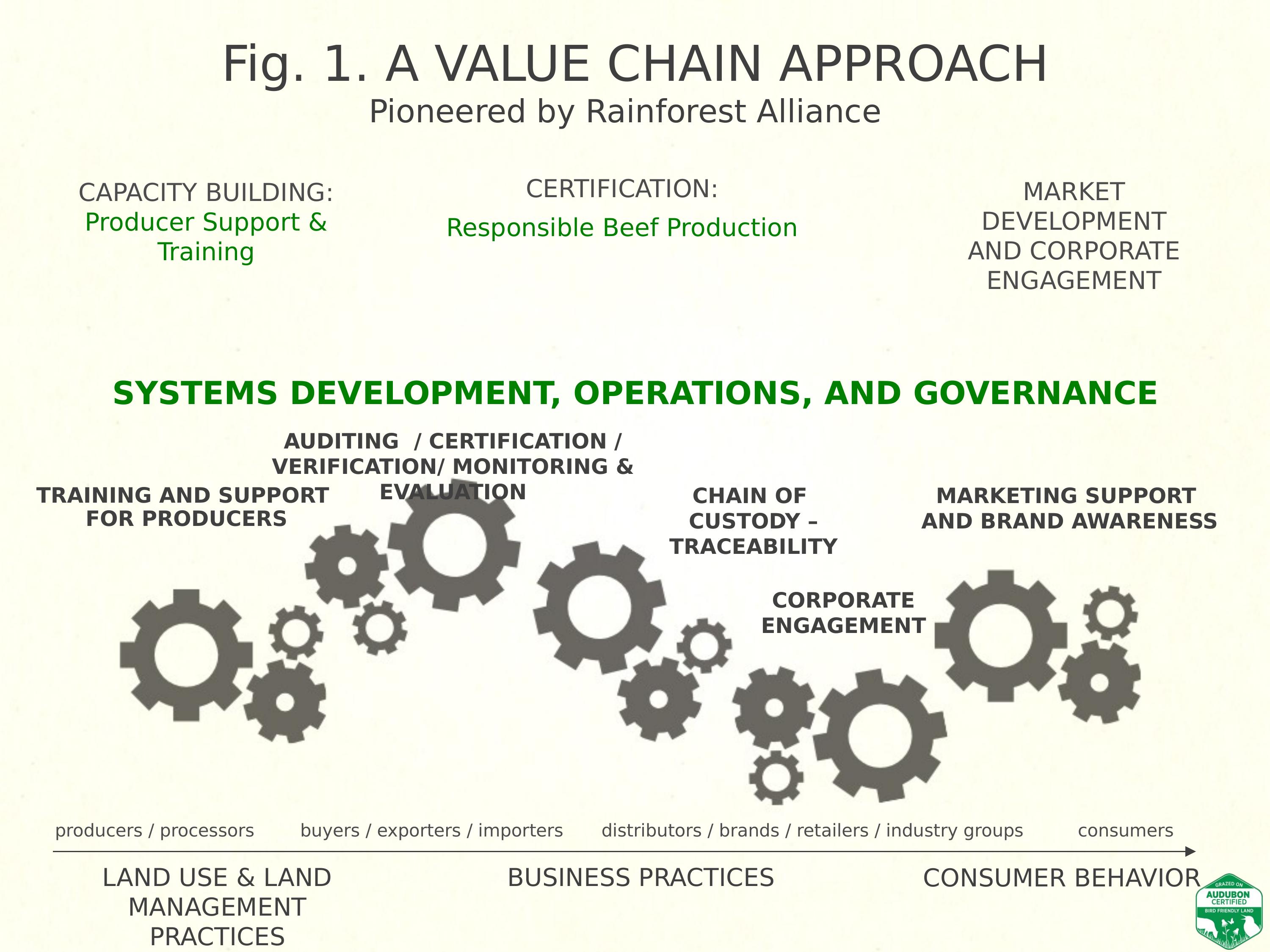
Challenge. A long-time colleague at Audubon reached out, seeking help addressing barriers to success as ACR worked to scale its bird-friendly ranching certification program to 10 million acres.
Approach. Viewing the certification program as a system of interconnected cogs, we led national and regional executives, ranching and retail partners, and funders through the collaborative process of designing an Integrative Conservation Strategy — because if even one cog becomes stuck, the whole machine grinds to a halt. Specifically, we:
- Diagnosed which program components were working and which needed capacity-building investments, based on a survey of staff, partners, and funders.
- Devised a menu of options for ACR to generate revenues from the valuable services the program can offer to producer and supply chain customers. These included (1) “Top down” partnerships with beef brands and institutional buyers (retailers, restaurant chains, food service providers) who require some or all of their producer suppliers to get certified; and (2) “Bottom up” opportunities certifying individual ranchers as they express interest in the program, as well as ranch members of landscape conservation collaboratives and NGO partnerships (e.g., with TNC, land trusts, RCDs) working to improve stewardship in high conservation value habitats such as migratory corridors.
- Designed a Monitoring & Evaluation framework to quantify and report triple-bottom-line benefits, paired with targeted marketing and communication options to build awareness of and trust in ACR’s certification seal.
- Developed a staffing plan, budget, and annual production timeline under two scenarios: 5 and 10 million acres.
Read the full case study
Key Insights
One of the most valuable long-term levers for scaling ACR’s impact was “top-down” supply chain partnerships with beef brands and institutional buyers (described above). A single such partnership can bring ACR access to five to fifty-plus ranches and thousands to over a million acres at once — the kind of scale ACR needs to reach its 10-million-acre goal. Similarly, certifying rancher members of landscape conservation initiatives to distinguish their management of priority habitats and migratory corridors adds large acreages to the total.
Lessons Learned
- Diagnosing barriers to program success sometimes surfaces uncomfortable findings. The program struggled to even get added to Audubon’s website navigation — reachable only with what one staffer called “a roadmap”. It had also only recently won permission to establish its own Instagram account. The downstream effect of ACR’s inability to effectively promote its value proposition was concrete: one certified rancher reported never getting a single inquiry that referenced the certification. The value of an outside advisor is being trusted to trace a symptom back to its actual structural cause, honestly, while still protecting every stakeholder’s confidence. Our final report clearly conveyed the value to both the program and Audubon’s mission of ensuring ACR has the resources and approvals needed to build public awareness of and trust in its certification seal.
- One early ACR value proposition element promised prospective customers something outside the program’s control — a price premium for certified beef. This backfired when the premium didn’t materialize for every rancher. The fix was reframing ACR’s targeted value propositions around what the program could guarantee: improvements to soil health, resilience to drought, improved grass and livestock productivity, and overall ecosystem health – including and beyond bird populations. ACR could promote these valuable benefits through multi-media marketing like video footage of degraded pasture turning into thriving bird habitat. A value proposition should only promise what you’re confident you can deliver.
Transferable Ideas
- External diagnostic input surfaces what insiders can’t see on their own (or feel held back from expressing openly and honestly). The same logic behind the Grasslands Alliance’s multi-stage external review — via input from scientists, producers, NGO partners, and pilot audits — shows up again here, applied to program strategy instead of technical standard design. A survey of staff, partners, and funders did for Audubon’s program what external review did for a certification standard a decade earlier.
- As marketing guru, Seth Godin advises, “if you need to water down your story to appeal to everyone, it will appeal to no one.” The targeted value propositions completed for ACR — informed by outstanding ideas from interviewees — customized pitches by priority audience: national leadership needed to hear bird habitat and mission, not beef; ranchers needed a case that certification’s benefits exceeded its costs; brands needed access to beef sourced from credibly bird-friendly ranches and benefits to brand reputation; environmentally-minded consumers needed a way to distinguish beef produced on certified bird-friendly ranches. Targeting pitches across audiences who each have their own reasons to say yes is essential for creating a remarkable program.
Embers Foundation — Rewild (2022–2023)
NGO · Philanthropy · Wildfire · Biodiversity · Working Lands · Climate Adaptation · Climate Mitigation

Challenge. A corporate foundation wanted to launch a major wildfire resilience initiative — but first needed a trusted advisor and thought partner to ensure it was investing in the right strategy to advance its mission and vision.
Approach. As Senior Program Officer, served as advisor and thought partner to the President & Executive Director, translating the question of “where should we invest, and why?” into an operating strategy that became “Rewild” — a three-pillar program (Replant / Reduce / Research) integrating fire and restoration science, Indigenous cultural burning, NGOs, agencies, and philanthropy. Specifically, we:
- Co-authored the strategy, presentations, and public materials that communicated the foundation’s approach to grantees, partners, and its broader network.
- Actively participated in the Wildfire Resilience Funders Network — building relationships with peer funders, agencies, NGOs, and tribes to align investments around shared goals.
- Tracked emerging science, technology, and policy to surface underfunded solutions. The goal: add unique value by helping to fill key gaps in the philanthropic landscape.
- Conducted due diligence on grantee proposals, delivering funding recommendations to the President & Executive Director.
Read the full case study
Key Insights
- Aligning wildfire-resilience philanthropy turned out to be a coordination challenge as much as an investment decision. Participating in the Wildfire Resilience Funders Network mattered nearly as much as grantmaking itself, since duplicated or misaligned funding wastes scarce philanthropic dollars.
- Tracking emerging science and policy is what surfaced Rewild’s highest-priority funding gap: the shortage of locally adapted native seeds and seedlings needed for post-wildfire restoration projects. The National Academies of Sciences report identifying that gap was led by my Ph.D. advisor, Dr. Susan Harrison — a genuinely welcome reconnection. We integrated her team’s recommendations into the Rewild strategy.
Lessons Learned
A philanthropic vehicle’s own lifespan doesn’t determine whether its work mattered. The Wildfire Resilience Funders Network relationships built during the Rewild engagement are what put me in the room as a fellow reviewer for the Conservation XPrize Fire Grand Challenge, a Funders Network participant. That’s how I met Seth Shalet, CEO of the Santa Clara County Firesafe Council: he posted on LinkedIn about the judging role with a line from the song, “Fire on the Mountain.” I wrote back with a Grateful Dead lyric of my own, and we became fast friends. A few months later when BurnBot needed help, Seth made the introduction to their CEO — but it was the wildfire-resilience expertise built designing Rewild that made the referral actually land. The network, the friendship, and the science all traveled forward together after the Embers Foundation stopped operating when its parent company was acquired by a competitor.
Transferable Ideas
A three-pillar structure — Replant, Reduce, Research — works because each pillar targets a distinct critical component of wildfire resilience solutions: prevention, restoration, and knowledge-generation. The same multi-benefit thinking that shaped the BurnBot fuels-treatment analysis and the Grasslands Alliance standard shows up here too: value multiplies when a strategy incorporates a diverse suite of potential benefits to nature and people.
BurnBot (2025)
NGO · Philanthropy · Business · Wildfire · Biodiversity · Climate Adaptation
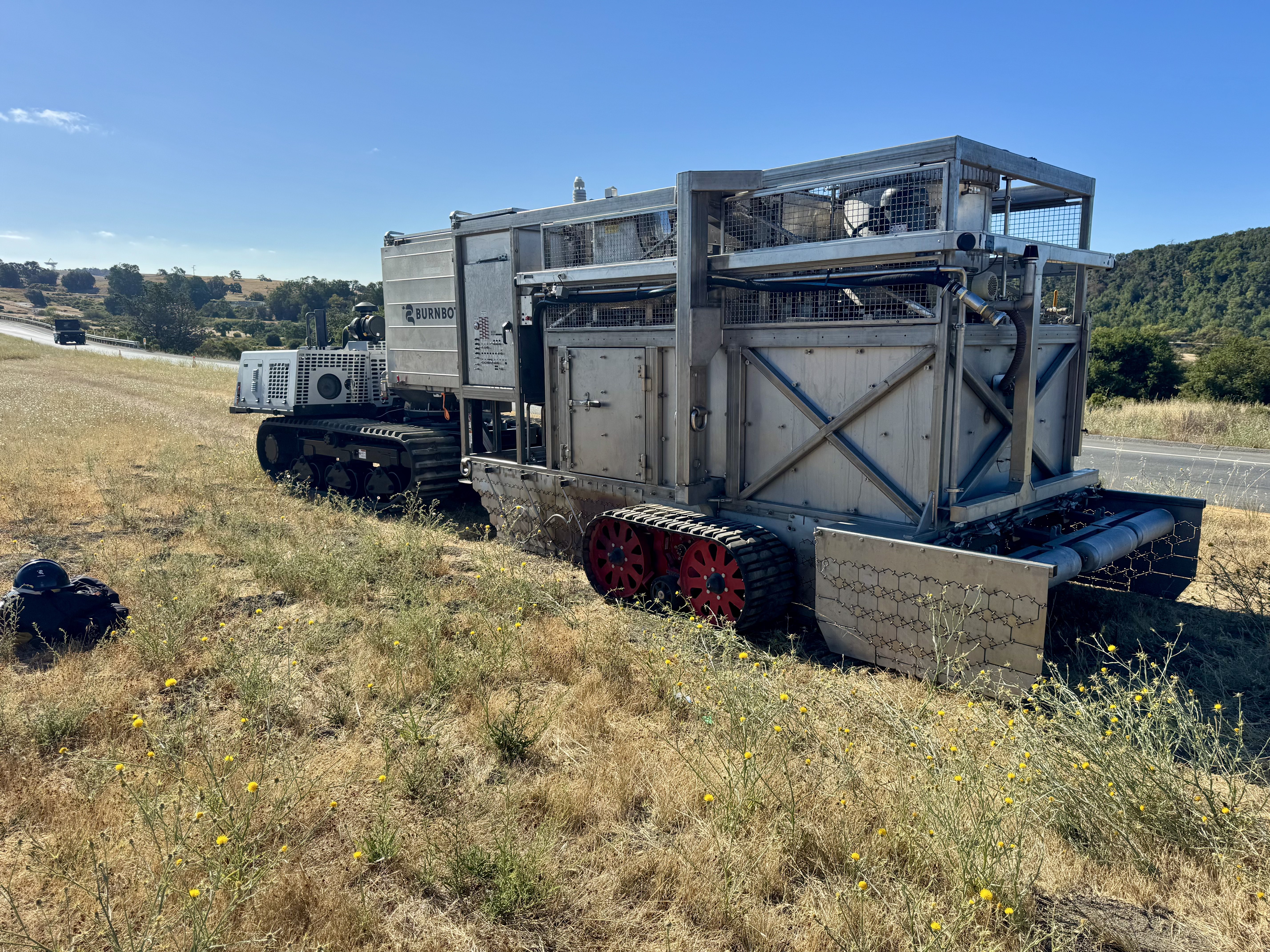
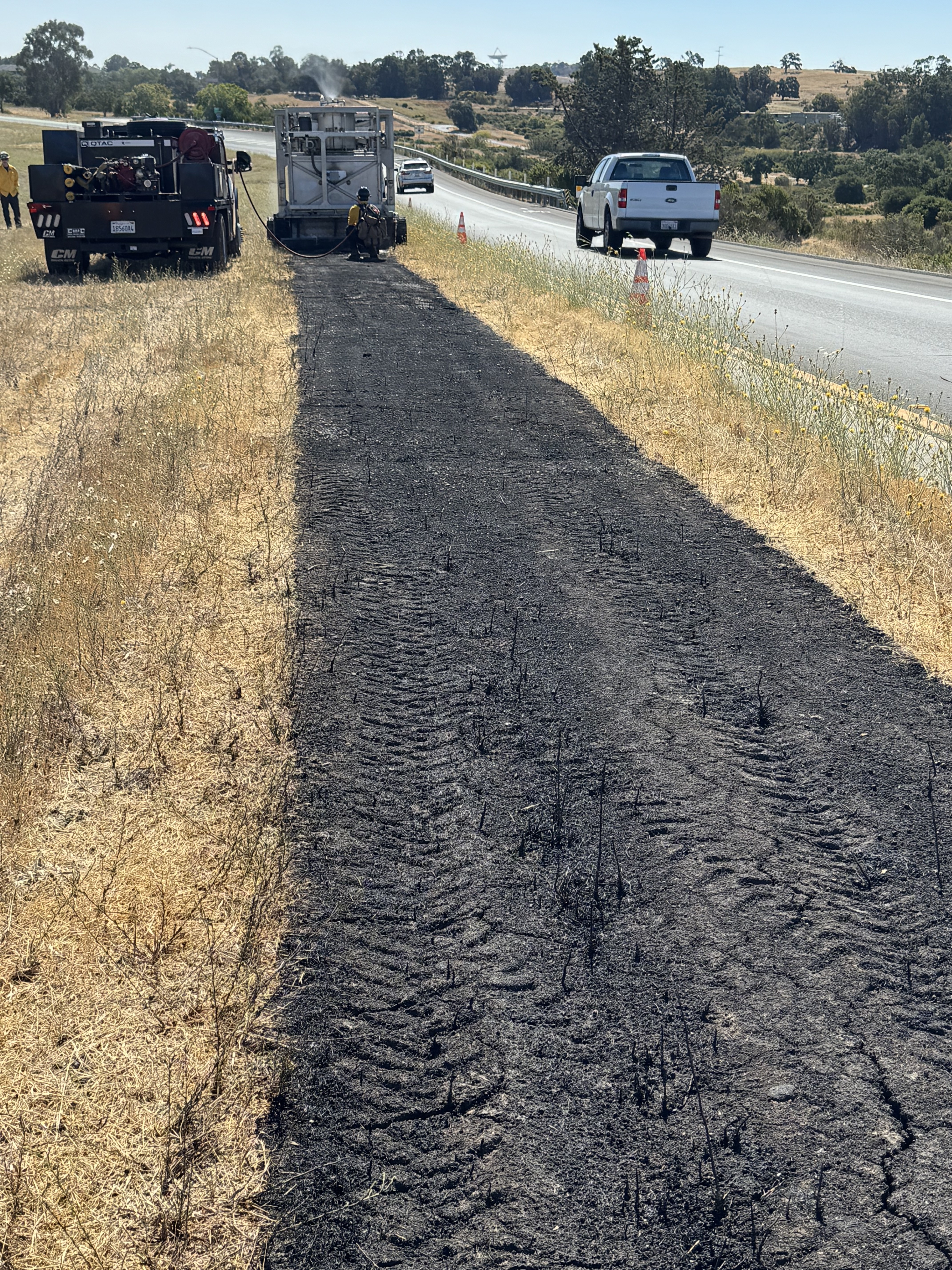
Challenge. BurnBot has developed a remarkable precision-burning robotics technology, but needed help understanding how to value its services — both to articulate the benefits they deliver and measure and amplify their impact.
Approach. We conducted a science-based strategic analysis, producing a technical white paper that demonstrated how BurnBot RX precision-burning treatments both generate more valuable benefits (wildfire resilience, invasive plant management, native habitat restoration, advancing fire research) and reduce risks of unintended consequences, compared to mechanical, chemical, and open prescribed burn alternatives.
Read the full case study
Key Insights
Our recommendation of three new value offerings for utility, agency, and other landowner customers reflected an urgent, sector-wide gap: fuels treatments are too often designed without integrating science-based best practices for maximizing benefits and minimizing risks at each site. Aligning treatment timing and type with site-specific science enables planners to substantially increase the ROI of precious fuels-reduction dollars — generating co-benefits including invasive plant control, native species and habitat restoration, and advancing wildfire research. The report is now a key resource for BurnBot’s Caltrans partnership. It identified the critical need for a multi-benefit fuels reduction framework and protocol – an idea that we are currently working to advance with multi-stakeholder partners.
Lessons Learned
BurnBot is a wildfire resilience robotics technology company, not a land trust, agency, or NGO. So the value question wasn’t only “is this scientifically sound?” but also “what is this actually worth, and to whom?” Naming three new service offerings meant translating ecological rigor into targeted value propositions that a utility, agency, or other landowner customer could act on — a different kind of translation work than the standard-setting or policy analysis elsewhere in this portfolio.
Transferable Ideas
One management practice, several kinds of value at once — the focus on maximizing conservation value found in the Earthjustice riparian-corridor finding and in the Grasslands Alliance’s targeted value propositions shows up here in a different medium. Designing a precision burn well doesn’t just reduce fuels. When treatment planning incorporates the full range of potential benefits at a site, it can also manage priority invasive weeds, facilitate the restoration of native species and habitats, and advance fire research. Where planning focuses only on fuels reduction, the resulting treatment can produce the opposite of a co-benefit: a poorly-designed burn that clears fuels, but inadvertently accelerates invasion of fire-promoting weeds.
Earthjustice — Climate-Smart Public Lands Grazing (2016)
NGO · Biodiversity · Working Lands · Climate Adaptation · Climate Mitigation
Full report title: “Integrating Enforceable Climate-Smart Requirements into the Federal Public Lands Grazing Program — Phase I: Scoping Analysis.” Jonathan Gelbard, Ph.D., Conservation Value. December 27, 2016. 55 pages, sole-authored.

Challenge. In 2015, the White House Council on Environmental Quality found that improved management of agricultural and grazing lands could meaningfully increase carbon sequestration and reduce emissions. Yet federal public lands grazing — covering 248 million acres, roughly a third of all U.S. grazinglands — had done almost nothing to act on it. Earthjustice wanted more than policy options: an expert evaluation of the evidence base for a formal rulemaking petition, meaning interventions that were not just scientifically sound, but specific and enforceable enough to write directly into a grazing lease.
Approach. A scoping analysis addressing three questions in sequence: (1) the problem — emissions and degradation caused by business-as-usual grazing management; (2) possible solutions — recommended management practices paired with adaptive management and monitoring metrics; and (3) climate and biodiversity benefits that implementation could achieve across the full 248 million acres. Each recommendation had to clear two bars, not one: scientifically sound, and specific enough to be written into an enforceable lease.
Potential climate mitigation impacts: current emissions from cattle and their waste on BLM and USFS lands are 7.11 MMT CO2e per year — equivalent to 2.1 coal-fired power plants. Improved grazing management across the full 248 million acres has the potential to sequester 25.12 MMT CO2e per year — 7.3 coal-fired power plants. Commercially viable practices can reduce enteric methane and nitrous oxide emissions by an estimated 20–30%.
One intervention, cascading benefits. Restoring degraded riparian corridors emerged as the single highest-leverage intervention available — producing roughly 25 times more vegetation than upland sites, functioning as hotspots for native fish and wildlife, providing critical habitat connectivity, filtering runoff, and offering some of the largest potential carbon sequestration gains identified in the report.
Read the full case study
Key Insights
Three enforceable recommendations: (1) update the stocking rate of each allotment to reflect current forage and animal conditions; (2) update the grazing schedule to reduce emissions and enhance resilience; and (3) employ an adaptive management framework — pairing the flexibility ranchers desire with monitoring that verifies whether it’s working (“flexibility with accountability”). The adaptive management framework (sourced from the Conservation Measures Partnership) compared four existing monitoring systems: Interpreting Indicators of Rangeland Health, the NRCS National Resource Inventory, BLM’s Assessment, Inventory and Monitoring program, and the Sustainable Rangeland Roundtable’s Criteria and Indicators.
Lessons Learned
Adaptive management has a design flaw baked into its own name: adapting is the part far too many skip. Agencies set objectives, collect monitoring data — but translating that data into improved management is where they stall. This report named that gap directly, calling it adaptive management’s own Achilles heel. It’s why the frameworks built now explicitly detail how to use monitoring data to achieve targeted outcomes, from improving management to reporting and amplifying valuable benefits generated.
Transferable Ideas
The biggest untapped lever in this space isn’t more research — it’s coalition-building. Conservation groups fighting poor federal grazing management have largely stayed disconnected from the sustainable food movement’s consumer and retail leverage campaigns. This gap was flagged directly in 2017 stakeholder consultations for Earthjustice, and highlighted in Part VII of the 2018 beef sustainability blog series: NGOs could trace which retail and restaurant buyers source beef from public lands, and apply the same supply-chain pressure that’s worked in forest products and soy to drive management improvements across millions of acres.
WWF Climate Camp / Buying Time (2002–2008)
NGO · Philanthropy · Business · Climate Adaptation · Working Lands · Biodiversity
The adaptation framework itself is Lara Hansen’s, developed at WWF. Jonathan’s contribution was authoring Chapter 1 — adapting that framework to what grassland conservation specifically requires — and the facilitation that followed.

Challenge. In the early 2000s, land managers at major conservation organizations faced a problem with no established solution: how to integrate climate change predictions into land management planning. Adaptation had almost no practitioner literature. WWF’s Buying Time was pioneering work in building that solution.
Approach. Authored Chapter 1 of Buying Time — adapting the framework to what grassland conservation specifically requires. Then instructed and facilitated the Grasslands and Montane Working Group at WWF’s Climate Camp workshops in Washington, D.C. (2006) and San Francisco (2008): presented the framework on the opening day, then guided land managers from around the world — representing WWF, Conservation International, Wildlife Conservation Society, and The Nature Conservancy — in applying it to their own contexts. Each participant presented preliminary adaptation strategies for their own landscape on the workshop’s final day.
Read the full case study
Key Insights
Facilitation is its own craft — closer to conducting than instructing. The best sessions weren’t the ones with the most to say; they were the ones where reading the room’s energy and getting out of the way enabled participants to synergize. Without knowing the term “global warming,” local land managers and herders from around the world were independently describing the same phenomenon: Mongolian herders reported over 1,400 dried springs and the loss of four million head of livestock since 1999; Andean farmers described potato cultivation climbing 300 meters in elevation in fifty years, chasing a retreating frost line. It was clear that people didn’t need the vocabulary of climate science to know something fundamental had shifted — they needed a framework for what to do about it.
The passage worth quoting directly, from the chapter’s discussion of implementation barriers: “The most effective options for maximizing resilience may not always appear socioeconomically feasible, may not be legal, and may meet with considerable political resistance… ecologists and land managers will need to work together with economists, sociologists, communication specialists, policymakers, and the public.” — Buying Time: A User’s Manual, Chapter 1 (WWF, 2003). Ecological science, communication, and stakeholder engagement — the same three disciplines on the Approach page — named as the path to successful implementation in 2003.
Lessons Learned
What does adaptation guidance written in 2003 look like in 2026? The multi-benefit thesis has held up — and matters more now than it did then. A framework that survives two decades of practice while the field around it professionalizes isn’t nostalgia; it’s evidence that naming conservation value clearly isn’t a nice-to-have argument, it’s the argument.
Transferable Ideas
The strongest evidence that a framework like Buying Time actually works isn’t that it travels to unfamiliar places — it’s that it holds up when applied to a landscape already known intimately. The California contribution to the group came from years studying grassland invasion ecology: predicted increases in rainfall threatened to worsen weed invasions already costing ranchers millions. Buying Time didn’t only reflect what herders in Mongolia and farmers in the Andes already knew from lived experience — it was aligned with the types of management recommendations made in multiple peer-reviewed publications.
NRDC Beef Supply Chain Sustainability & the Grasslands Alliance Standard (2011–2024)
NGO · Business · Working Lands · Biodiversity · Climate Adaptation · Climate Mitigation
An eleven-year arc, fully sourced and dated. Important: the Grasslands Alliance was never fully funded to operate as an active certification program — Food Alliance keeps it publicly available as a demonstration and archive, not a currently operating program. The 1M+ acre pilot and the standard itself remain real, dated, historical facts regardless.

Challenge. In 2011, writing publicly about mattress material sustainability, a gap was named that turned out to run much deeper: no certification existed that let a buyer verify whether livestock-derived products came from well-managed rather than overgrazed grasslands. When NRDC hired me in 2012 to help identify their path forward for advancing credibly more sustainable ranching, our analyses confirmed it — there was no widely adopted certification, no Forest Stewardship Council for grasslands and ranching, for buyers like McDonald’s and Walmart to advocate for.
Approach. An eleven-year due-diligence arc, each step dated and sourced:
- Origin (Dec 2011). An independent review resolved an internal NRDC dispute: a major donor wanted their sustainable grazing initiative built around the Savory Institute’s Holistic Resource Management approach; the Land & Wildlife Program pushed back. The review found the evidence didn’t support Savory’s claims as a standalone climate solution — but the outcome wasn’t exclusion. Savory Institute remained a partner in the work that followed. This diplomacy became the work sample that led to the hire.
- First deliverable (May 2012). A report for the Rockefeller Foundation’s Search Committee, synthesizing scientific evidence across the beef supply chain’s three phases. This also marked the start of Tables 1 & 2 — an annotated bibliography that continued growing through the entire standard development process.
- First draft criteria (Jan 2013). Benchmarked against the four most prevalent U.S. livestock certifications: Food Alliance (42 of 91 BMPs), SAN/Rainforest Alliance (26 of 91), USDA Organic (8 of 91), Animal Welfare Approved (6 of 91). None came close to comprehensive.
- External review forces a pivot (2013). Twelve scientific and practitioner reviewers responded — the most important feedback came from ranchers: tell us what to achieve, let us figure out how. That drove the standard’s design toward outcomes-based Criteria and Indicators, with best-management-practices as implementation guidance rather than requirements.
- Multi-Stakeholder Workshop stress-tests the revision (June 2013). Produced, directed, and co-hosted with UC Davis and Cornell — convening 40+ scientists, ranchers, and funders. At its conclusion, Rainforest Alliance and Food Alliance proposed partnering to develop what would become the Grasslands Alliance standard.
- Multi-NGO alignment, in parallel (2014–2015). The Conservation NGO Beef Summit and the Responsible Beef Summit convened organizations whose theories of change genuinely conflicted — NRDC, WWF, TNC, Defenders of Wildlife, Ducks Unlimited, EDF, Audubon, and the Savory Institute — producing a shared vision feeding directly into the standard’s criteria.
- Public launch (2015) introduced the Stairway to Certification concept — an entry-level continuous-improvement tier alongside top-performer certification.
- Piloted at scale (fall 2015). The Grasslands Alliance Standard was piloted on ranches totaling more than 1 million acres across the Great Plains, Rocky Mountains, and Great Basin, built to the ISEAL Code of Good Practice.
Read the full case study
Key Insights
The standard was benchmarked against four existing certifications using actual counts — a specific, defensible gap analysis. It is the first sustainability standard to include the full range of climate change mitigation and adaptation strategies available to the North American ranching sector. Fencing and off-stream water to keep cattle from polluting streams also produces more even grazing distribution — meaning cattle consume more upland forage and gain more weight, generating both environmental and business benefits at once.
One framework, two validations. The same indicator set was independently recognized by federal policy (Earthjustice’s 2016 analysis built its recommended metrics on the same 2013 Workshop indicators) and peer-reviewed science (Ahlering et al. 2021, Rangeland Ecology & Management, invited Jonathan specifically because these indicators were already shaping industry standards).
Lessons Learned
The clearest lesson from a decade of work: developing a science-based solution and motivating people to actually adopt it are two very different challenges. What actually motivates a rancher to improve stewardship usually isn’t science-based recommendations — it’s social proof (seeing a neighbor’s grass stand taller through drought) and appeals to identity (shifting from livestock producer to land steward). Ecological science hasn’t consistently shown the results these behavior-change strategies should produce — likely because benefits are context-dependent, underscoring the importance of flexibility paired with certification that verifies whether the outcome was actually achieved.
Transferable Ideas
The same systems-thinking “cogs” logic that shaped the Audubon strategy in 2024 first appeared in writing in Part VII of the beef sustainability blog series: “the machinery of change is composed of interconnected cogs. If even one cog becomes stuck, the whole machine grinds to a halt.” Chris Wille once described how Rainforest Alliance’s first major retail breakthrough came when Greenpeace’s pressure campaigns motivated a retailer to seek certification — activist pressure created the opening certification then filled. That market pressure was a missing piece for Grasslands Alliance adoption: American conservation NGOs working on ranching impacts were largely absent from the sustainable beef conversation, unlike comparable campaigns in the tropics and in feedlot supply chains. A credible certification is one cog in the machinery of positive change — without market pressure to get each cog turning, even the best-designed certification won’t reach the scale it was built for.
Hicks Mountain Ranch (2017–2019)
NGO · Working Lands · Biodiversity
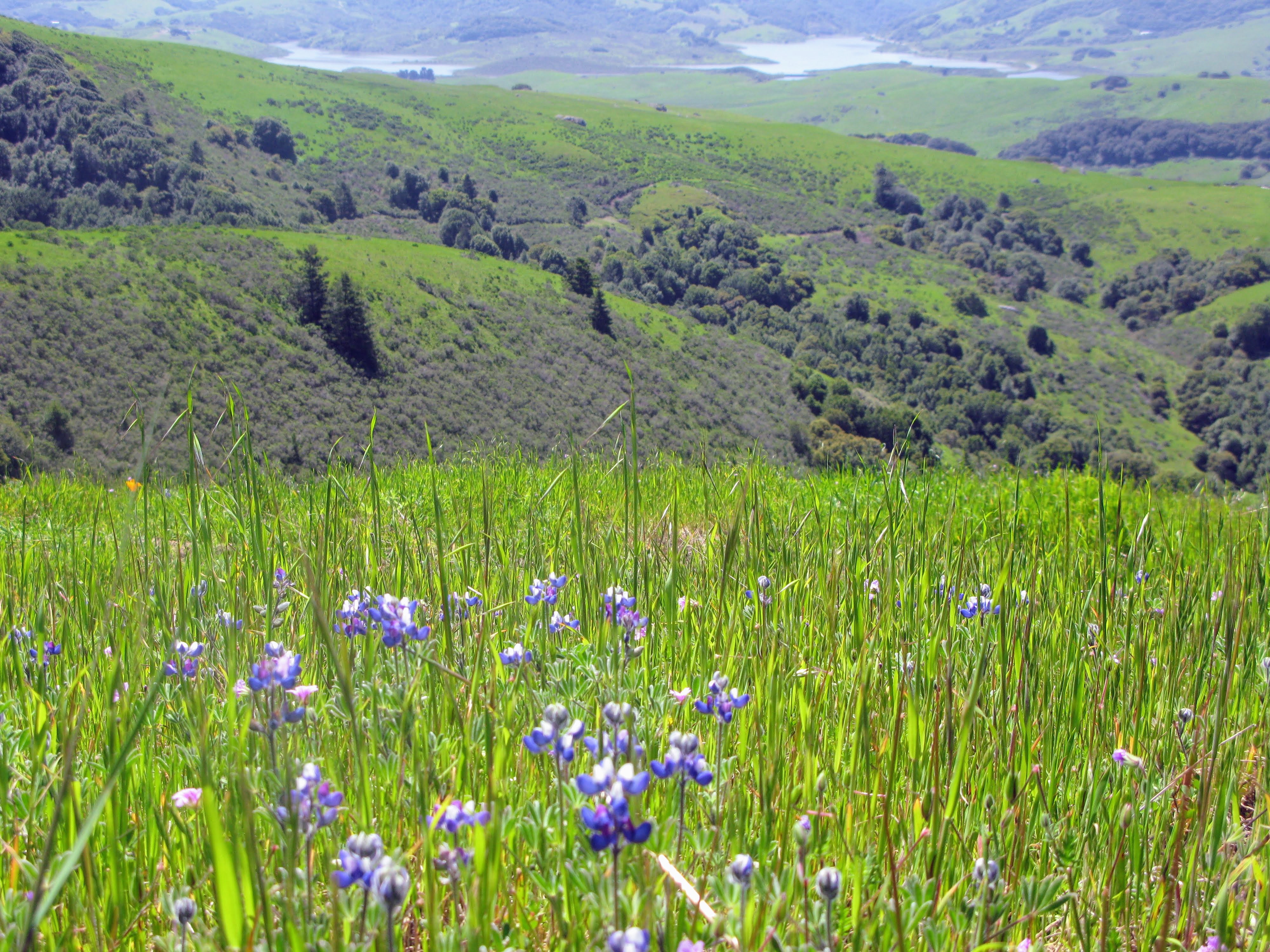

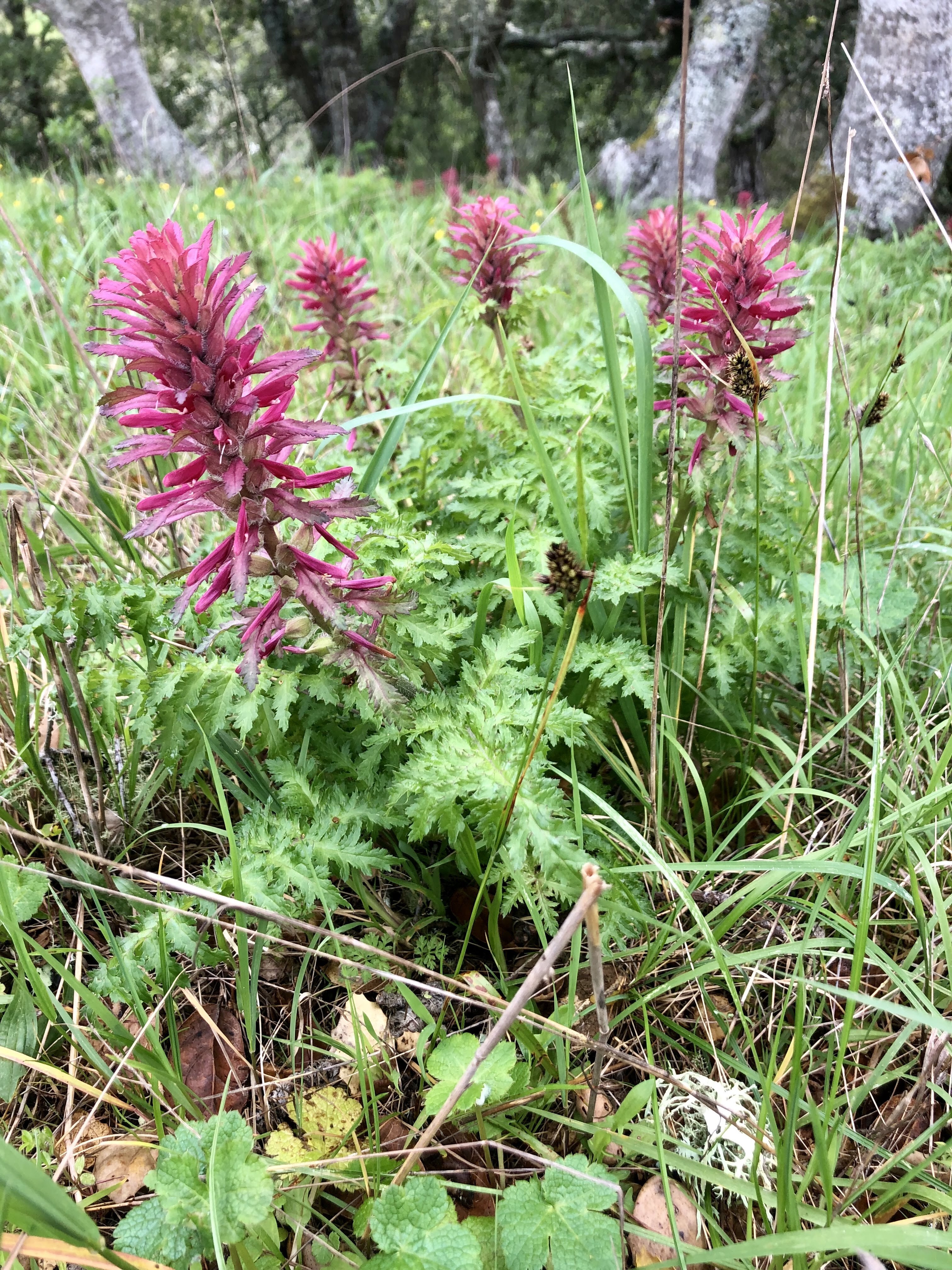


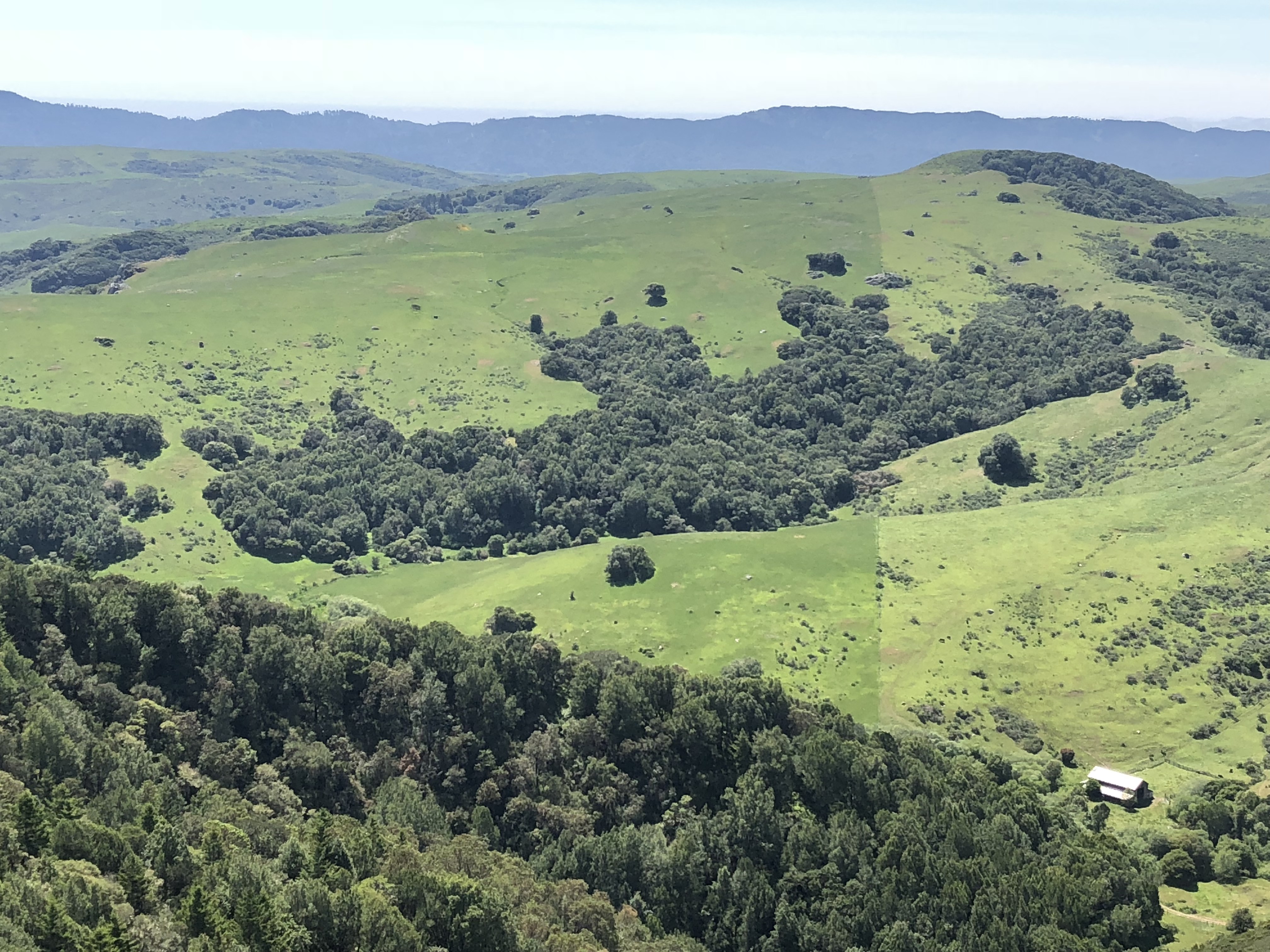
Challenge. A philanthropist landowner wanted to understand the biodiversity on her family’s beautiful west Marin County ranch — and how to conserve, restore, and enjoy it.
Approach. Conducted a rapid plant biodiversity assessment and authored an ethnobotanical guide to the edible, medicinal, and Indigenous uses of 391 identified species. Produced invasive plant management resources for priority species at the ranch manager’s request, and led guided naturalist hikes for the landowner. The guide continues to advise the management team on effective invasive plant management today.
Read the full case study
Key Insights
Variation in soils and habitat types drove not just species diversity, but how responsive the land was to management improvement — with direct implications for prioritizing where restoration efforts pay off fastest.
- A single weed can tell you a landscape’s management history. Yellow starthistle showing up on a hillside means the soil is fertile enough to recover — not ruined, just degraded. Its absence in the ranch’s serpentine grasslands means the opposite: soils so mineral-poor that even aggressive invaders can’t establish, making these habitats de facto refuges for native wildflowers found nowhere else on the property.
- Field surveys caught three early-stage medusahead infestations before they could spread, enabling eradication recommendations while the problem was still relatively inexpensive to control.
- The most remote habitats surveyed — island grasslands isolated within dense shrublands, likely never grazed — had strikingly soft, low-bulk-density soils, a visceral marker of how much California’s grassland soils may have changed since European arrival and the introduction of livestock grazing. This observation echoed Part III of a Ph.D. dissertation, which found the same unusually soft, sponge-like soils in isolated island grasslands on ranches in Napa, Lake, and Colusa counties nearly two decades earlier — the same framing (“islands of biodiversity within a sea of Eurasian annual grasses”) arrived at twice, nearly two decades and one county apart.
- The invasive plant management work here counts as climate adaptation by effect: healthier, less-invaded plant communities build climate resilience whether or not “adaptation” appears in the contract.
Lessons Learned
The ethnobotanical guide became a deliverable in its own right — compiling the edible, medicinal, and Indigenous uses of identified species turned a biodiversity survey into a fascinating record of generations of applied and cross-cultural ecological knowledge. Good management doesn’t undo history by itself: blue wildrye should be common in Hicks Mountain’s oak woodlands, but overgrazing wiped out the local seed source, and no amount of improved grazing since has brought it back on its own. Sometimes the fix isn’t only better management — it may require active restoration, or sufficient time (often 1-2+ decades) for a seed source to return.
Transferable Ideas
Pairing rapid biodiversity assessment with documented traditional and applied ecological knowledge can turn a one-time survey into a durable, standalone applied knowledge product — worth repeating anywhere a property has deep Indigenous or long-tenured land-management history. The soil-condition finding also points to a broader opportunity: using rare, never-grazed reference sites as baseline calibration points for rangeland condition assessments elsewhere.
Montana Migratory Bird Stamp (2017)
NGO · Philanthropy · Business · Biodiversity · Conservation Finance

Western Tanager (Male)
Challenge. Montana Department of Fish, Wildlife & Parks relied almost entirely on hunting and fishing license sales to fund fish and wildlife conservation — leaving out the growing share of people who value Montana’s wildlife but don’t hunt or fish, and leaving revenue exposed to any decline in license sales. NRDC — working with Montana FWP — wanted the program designed and implementation-ready while the state still had a governor supportive of new conservation finance mechanisms.
Approach. In partnership with NRDC and Montana FWP, designed the business and marketing strategy for a conservation finance program — the Montana Migratory Bird Stamp — a voluntary, collectible annual stamp opening a new revenue channel for non-hunters and non-anglers. Modeled on “bright spot” precedents like the Federal Duck Stamp, and built on Seth Godin’s Purple Cow principle: designing a program so well-designed it markets itself.
- Designed the program’s business and marketing strategy: an annual art contest for the stamp’s design, a companion “Savings Guide” of partner-business discounts, and revenue targets of $500,000/year in Year 1, scaling to $600,000/year by Year 5.
- Built a market research and outreach plan across nine target audience segments.
- Directed revenue toward two priorities the agency’s license-based model couldn’t reach: non-lethal measures to reduce predator-livestock conflict, and research/education/habitat programs for nongame and at-risk species.
- Benchmarked the design against successful precedents — the Federal Duck Stamp, the Hawaii Wildlife Stamp, the Vermont Habitat Stamp.
Read the full case study
Key Insights
A small, targeted marketing spend can produce outsized returns in this category — Vermont’s Habitat Stamp program saw sales grow from $50,000 to $80,000 after a single $5,000 advertising push, a data point that directly shaped this program’s marketing budget. The real innovation wasn’t the stamp itself — it was expanding who could fund conservation. License-based funding caps an agency’s revenue at the size of its hunting and angling population; a voluntary stamp opens the door to non-hunters, tourists, and collectors. Directing revenue toward non-lethal predator-conflict prevention gave both hunters/ranchers and non-consumptive wildlife advocates a reason to support the mechanism — a rare point of alignment.
Lessons Learned
A program so well-designed it markets itself is a much higher bar than designing a stamp and encouraging people to buy it. This wasn’t the state’s first attempt at a wildlife-funding stamp — an earlier proposal specifically for wolves drew real public enthusiasm (nearly 50,000 public comments) but also legislative opposition. The redesign had to address two separate challenges at once: broaden past a single politically-charged species to reduce risk, while still finding a legitimate way to reach that same enthusiastic audience. Public appetite and political risk are very different problems, and the funding mechanism had to survive both.
Transferable Ideas
The “everybody wins” framing — a funding mechanism that lets people who care about wildlife but don’t hunt or fish become paying stakeholders — widens a conservation program’s funding base. Benchmarking against “bright spot” precedents before designing anything new is the same due-diligence habit built into every other engagement on this site. The annual art contest and Savings Guide discounts aren’t add-ons to the funding mechanism — they’re what makes it worth talking about in the first place.
Spaldin Sleep Systems (2010–2012)
Business · Health · Toxics
An engagement of Conservation Value, Inc., the firm predating the current CVS/CVI structure.

Challenge. The CEO of Spaldin — a European manufacturer of eco-friendly mattresses — hired Conservation Value, Inc. as a consultant to answer customer questions about the green attributes of the company’s products. We stepped up to build the communication strategy to guide this work after the marketing director failed to deliver it.
Approach. Conducted a full-lifecycle evaluation of the mattress textiles’ green attributes and certifications, from raw materials through end-of-life, then rebuilt how the company communicated about environmental and health benefits. Specifically, we:
- Overhauled the website and marketing materials to promote green attributes in an accurate, transparent, and verifiable manner.
- Authored a four-part series on advancing sustainability in the mattress sector — the direct precursor to the Five Key Questions methodology, later applied to advance beef supply chain sustainability.
- Represented Spaldin on a mattress sector Green Board of Governors after the series drew industry attention.
- Secured celebrity endorsements (Joan Baez, Daryl Hannah, Arianna Huffington, Ziggy Marley, and others) in partnership with a celebrity-agent colleague.
Read the full case study
Key Insights
The market gap this work first named publicly in 2011 — that no independent third-party certification existed for a mattress company to verifiably communicate its full suite of environmental and health attributes — is the same gap that later led to building the Grasslands Alliance Standard: the same systems-based approach, applied to two very different industries. Building visibility — celebrity endorsements, national press — only followed after the underlying full-lifecycle evaluation was complete.
Lessons Learned
This was the first engagement that applied what has since become the Five Key Questions Framework — proving effective for preventing greenwashing and generating benefits via accurate, verifiable marketing claims, a discipline that shows up in every engagement since, including the standard later built with NRDC, Rainforest Alliance, and Food Alliance. What this engagement uncovered was the need for a fifth key question: how do you do it? — focused on successful implementation.
Transferable Ideas
A thought leadership blog series calling out a market gap can double as business development — Spaldin, and later NRDC, both approached directly on the strength of writing that simply named a problem clearly, without pitching a solution. Sustainability communication benefits from the same science-based, stakeholder-involved framework later structured into the Grasslands Alliance’s due-diligence arc: verify each claim — ideally via independent third-party certification — before it goes into marketing. Outcome: coverage in O, The Oprah Magazine and Good Housekeeping’s The Daily Green; the company remains a market leader today.
There are more remarkable stories and photographs than what’s listed here — this page will keep growing.