
Jonathan Gelbard, Ph.D.
Principal & Director of Integrative Conservation
Applied Conservation Scientist · Systems Strategist · Naturalist Storyteller & Advocate · Program Architect
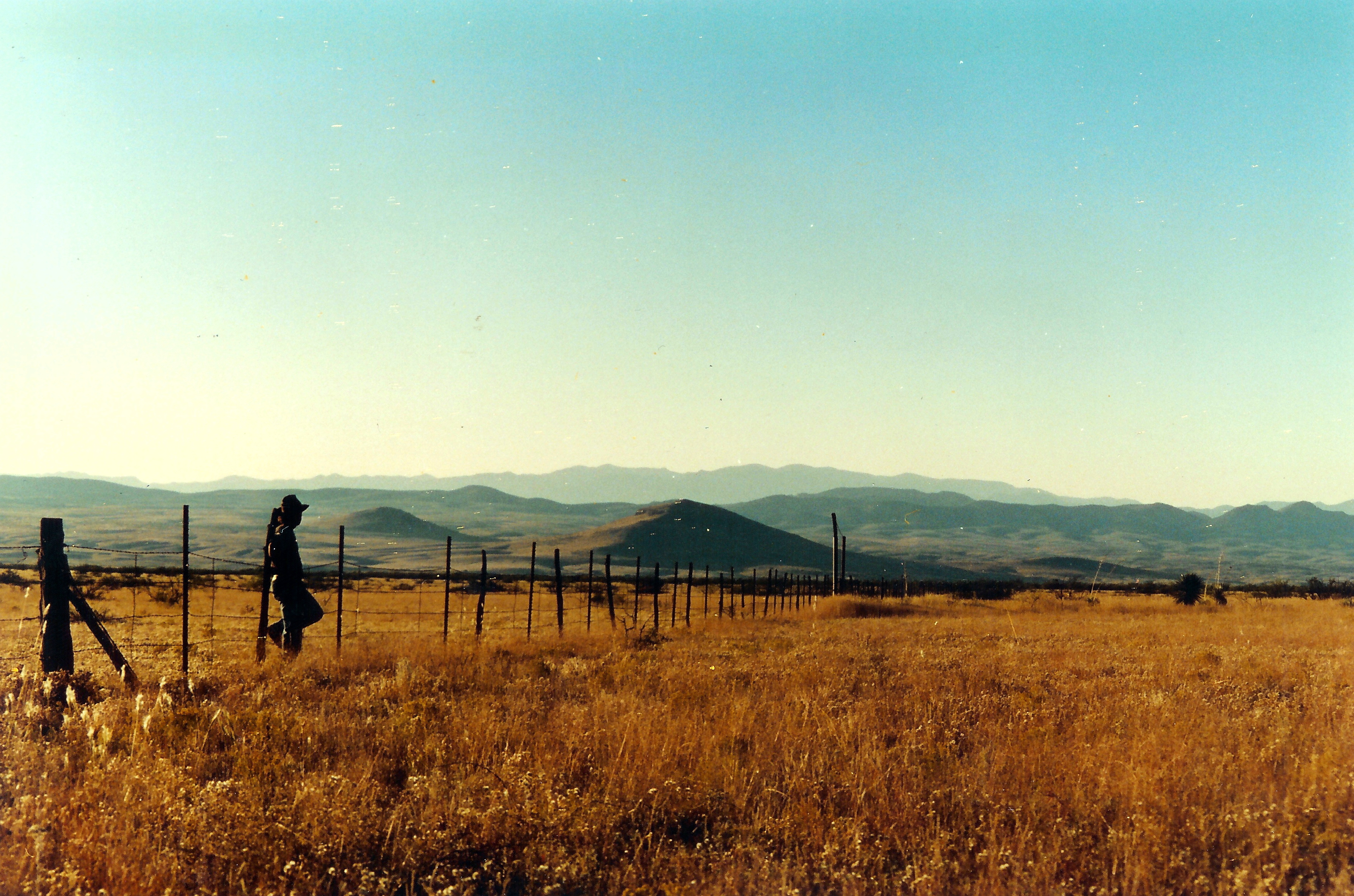
My career began in an unlikely place: one of America’s earliest collaborative conservation partnerships, where ranchers, environmentalists, scientists, and agencies worked together across a shared landscape — the Malpais Borderlands Group in the Southwest. That grass-banking model stayed with me: I cited it in WWF’s climate adaptation manual, and proposed it as a collaborative approach to restoring good fire to grasslands in a University of California Press book chapter.
Since then, I’ve spent more than 25 years working at the intersection of conservation science, landscape-scale conservation, climate and wildfire resilience, sustainable ranching, public policy, and the communication and behavior change strategies that move science to action.
What connects these experiences is a question that has fascinated me since that first conservation job: How do people with different perspectives discover enough common ground to create and implement effective solutions for nature, communities, and society?
That question led me from collaborative conservation in the Southwest, to air quality and ecosystem recovery in the Rocky Mountains, to endangered species advocacy in the Great Basin, to landscape ecology research at Duke and UC Davis, to climate adaptation work with WWF, to civic engagement through HeadCount, to conservation leadership at NRDC and beyond.
It has inspired a special issue I’m developing at Frontiers in Conservation Science: “How to Make a Conservation Stick: What’s the Difference That Makes the Difference?” — exploring how to catalyze effective conservation solutions that achieve adoption and impact.
Today I help organizations translate science into conservation and sustainability strategies that unlikely partners can support, fund, and implement together — often by helping people recognize the conservation value embedded in solutions: not simply what they protect, but how they contribute to healthier communities, stronger economies, and greater resilience.
Current Roles & Affiliations
- Principal & Director of Integrative Conservation, Conservation Value Solutions
- Executive Director & Podcast Host, Conservation Value Institute — host and producer, The Nature of Music (13+ episodes, 2020–present)
- Associate Editor, Frontiers in Conservation Science — Social Sciences Section
- Listed provider, EcoAdapt Registry of Adaptation Professionals
Credentials
Ph.D. Ecology, UC Davis (NSF Biological Invasions IGERT Fellow) · M.E.M. Landscape Ecology, Duke University (Nicholas School) · B.S. Natural Resources, Cornell University. Minors: Communications, American Indian & Indigenous Studies, Creative Writing.
On Indigenous Sovereignty
Jonathan’s commitment to Indigenous sovereignty — from Cornell studies to facilitating a major gift to the Karuk Tribe’s Endowment for Eco-Cultural Revitalization — reflects long standing personal connections to tribal lands and leaders.
Career Timeline
The Nature Conservancy
Field biologist for The Nature Conservancy — ground-truthed satellite imagery across 1 million acres of the Malpais Borderlands Group in New Mexico and Arizona, including the 321,000-acre Gray Ranch (now the Diamond A); surveyed 320+ sites. Stepped in to lead a struggling vegetation monitoring project to successful completion, improving the team’s field data collection rate from 3 to 13 plots per day.
U.S. Forest Service
U.S. Forest Service Zirkel Air Quality Collaborative in Colorado — earned praise from USFS biologist Robert Musselman researching coal-plant pollution impacts on Rocky Mountain ecosystems.
Oregon Natural Desert Association
Oregon Natural Desert Association — authored the Great Basin redband trout ESA petition (advised by scientist Joy Belsky and attorney Dan Rohlf), which triggered a federal status review and was later praised by its USFWS reviewer as the best he had ever received. Continued to serve ONDA for well over a decade by authoring expert witness declarations supporting two federal land-management court victories on behalf of NGO clients — including a 9th Circuit Court ruling — protecting 1 million-plus acres of public lands from poorly designed management plans.
Duke University
Duke University, M.E.M. — 670+ survey sites across the Colorado Plateau and Great Basin with USGS and NPS scientists; Master’s research published as “Roads as conduits for exotic plant invasions,” Conservation Biology (950+ citations, most-cited paper).
UC Davis
UC Davis, Ph.D. Ecology — 150+ vegetation plots across lands of the Blue Ridge–Berryessa Natural Area Conservation partnership in Napa, Lake, and Colusa counties; two Ecological Applications papers from that research — “Roadless habitats as refuges for native grasslands: interactions with soil, aspect, and grazing” and “Invasibility of roadless grasslands: an experimental study of yellow starthistle” (225+ citations combined). Postdoctoral work for the UC Davis Natural Reserve System, including McLaughlin Reserve invasive plant mapping and EDRR strategy, authorship of a scientific literature review that improved the reserve management team’s understanding of well-managed vs. poorly managed grazing impacts (Gelbard, J.L. 2003. Potential Positive and Negative Effects of Livestock Grazing on Valley and Foothill Plant Communities of the Interior California Floristic Province, With Reference to the Knoxville Wildlife Area, Napa County. UC Davis Natural Reserve System, November 2003), and two CDFW management plans.
World Wildlife Fund · 2002–2008
World Wildlife Fund, Climate Change Adaptation Specialist — authored Chapter 1 of WWF’s “Buying Time” climate adaptation manual, then instructed and facilitated the Grasslands and Montane Working Group at WWF’s Climate Camp workshops in Washington, D.C. (2006) and San Francisco (2008), training land managers from around the world — including from WWF, The Nature Conservancy, Conservation International, and Wildlife Conservation Society — to integrate climate change predictions and solutions into land management planning. Also helped secure Governor Jerry Brown as keynote speaker, with live music from members of ALO, for the Climate Camp’s closing celebration at the Exploratorium in San Francisco.
HeadCount
HeadCount, Founding Outreach Director, later Advisory Board member — helped launch the organization; the founding team won the Mimi Fishman Community Service “Jammy” Award, presented at the Theater at Madison Square Garden, for registering 50,000+ voters.
Conservation Value Institute
Conservation Value Institute, Executive Director — the nonprofit research and education arm, often partnering with music-industry collaborators; published 1,100+ posts on Conservation Value Notes exploring conservation science for a general audience. The same organization continues that mission today through The Nature of Music podcast.
Conservation Value, Inc.
Conservation Value, Inc., Principal Conservation Scientist & Communication Specialist — built a psychology-based messaging strategy for NOAA’s Seabird Protection Network with an elite marketing strategist, and designed a supply-chain sustainability course for UC Berkeley Extension covering energy, food, forest products, and toxic-chemical safety across multiple sectors. Multiple additional projects serving NGO, agency, and business clients.
NRDC · 2012–2021
NRDC, Lead Scientist & Program Manager, then Strategic Advisor — Grasslands Alliance Standard, piloted on 1M+ acres.
On Effectiveness
“The programs I help design tend to outlast the engagement — the ideas keep growing through new organizations, partners, and forms. I treat that kind of compounding as the real performance metric.”