

Moving science to action — creating conservation and climate solutions that deliver lasting value for nature & people.
Conservation Science. Systems Strategy. Communication. Partnerships. Impact.
The biggest barriers to conservation success are rarely scientific.
They’re failures of strategy, communication, stakeholder alignment, implementation, or evaluation.
Conservation Value Solutions helps organizations overcome those barriers — refined over 25 years of collaboration with NGOs, agencies, foundations, businesses, and landowners.

Integrative Conservation Strategies: Three integrated disciplines. One framework. One outcome.
Solving complex challenges that no single discipline can overcome alone.
Why Clients Call Us
- “We need help understanding the biodiversity on our property and how we should manage to conserve, restore, and enjoy it.”
- “We have a good idea, but need help turning it into a credible strategy and implementation plan.”
- “We need help understanding our key barriers to success and how to address them to make our program more effective and impactful.”
- “We need help improving land management — from fuels reduction and grazing to invasive plant control — to maximize benefits of good stewardship for our site and minimize risks of unintended consequences.”
- “We need help identifying our highest-leverage conservation opportunities and building the strategic alignment and adaptive learning systems to sustain them.”
How We Create Value — Four Integrated Service Lines
A. Design More Effective Programs & Land Management Strategies
We apply the same Integrative Conservation Strategy development framework whether designing programs or land management strategies. The value isn’t just the deliverable — it’s the process.
Read more
Each strategy applies implementation science — integrating ecological and climate science, communication and behavior-change science, and direct stakeholder input — to build the buy-in needed to catalyze results and impact. From Early Detection–Rapid Response (EDRR)-based invasive plant management planning to prioritizing protection of core habitats and migratory corridors, we help organizations translate landscape ecology into adaptively managed, climate-resilient conservation networks. Applied across wildfire resilience, working lands, landscape conservation, climate adaptation, organizational strategy, certification program design, and conservation and climate communication. Experience with ESA, NEPA, FLPMA, and CWA.
The Result: programs designed to earn support and adoption — not just get built and shelved.
Clients: BurnBot · Audubon Conservation Ranching · Grasslands Alliance · Embers Foundation · NRDC/Montana FWP · NOAA
B. Make Better Strategic Decisions
“Before we commit staff, funding, and our reputation to a strategic decision, how can we be sure it is the right one?”
We serve as an independent scientific advisor, thought partner, and translator of science — vetting strategies, partnerships, and claims against scientific consensus and consulting with leading experts.
The Result: confidence that your organization’s next major commitment is built on solid scientific ground, reducing risks of costly missteps.
Clients: Embers Foundation · NRDC · Grasslands Alliance · Earthjustice · BurnBot · Conservation X Labs · WWF · NOAA
C. Quantify & Amplify Impact
“How do we know this is working — and how do we build the stakeholder support to scale it?”
From field-based biodiversity and invasive plant assessments to program-level monitoring and evaluation frameworks, we help organizations measure what matters and use that evidence to improve management — closing the loop that too many monitoring programs fail to complete.
Read more
We then translate results into compelling multimedia stories, reports, and other communications that fuel advocacy, inform policy, and earn the trust of funders, partners, and decision-makers. One indicator framework, built once, has been sought out three separate times: Ahlering et al. (2021, Rangeland Ecology & Management) invited Jonathan to represent the Grasslands Alliance in a peer-reviewed indicator synthesis; the Global Roundtable for Sustainable Beef, The Sustainability Consortium, and SASB drew on it for scientific advisory roles; and Earthjustice’s 2016 federal grazing analysis evaluated existing monitoring systems against the metrics recommended by participants at our 2013 Sustainable Grazing Workshop.
The Result: programs backed by credible evidence and narratives that get them funded, replicated, and scaled — not just measured and forgotten.
Clients: Audubon Conservation Ranching · Grasslands Alliance · BurnBot · UC Davis McLaughlin Reserve · Hicks Mountain Ranch · Sustainable Beef blog series
D. Build Partnerships That Transform Shared Goals into Action
for coalitions & cross-sector initiatives
Partnership-building, facilitation, and convening that turn shared goals into aligned action — the connective work behind every program in this brief that scaled beyond one organization.
The Result: coalitions that move together instead of working at cross-purposes — unlocking funding, permits, and public support no single organization could secure alone.
Clients: Grasslands Alliance · NRDC · Embers Foundation · ROTHBURY Think Tank · WWF · HeadCount · Redband Trout ESA Petition
Signature Case Example
CASE EXAMPLE · National Audubon Society — Audubon Conservation Ranching (2023–2024)
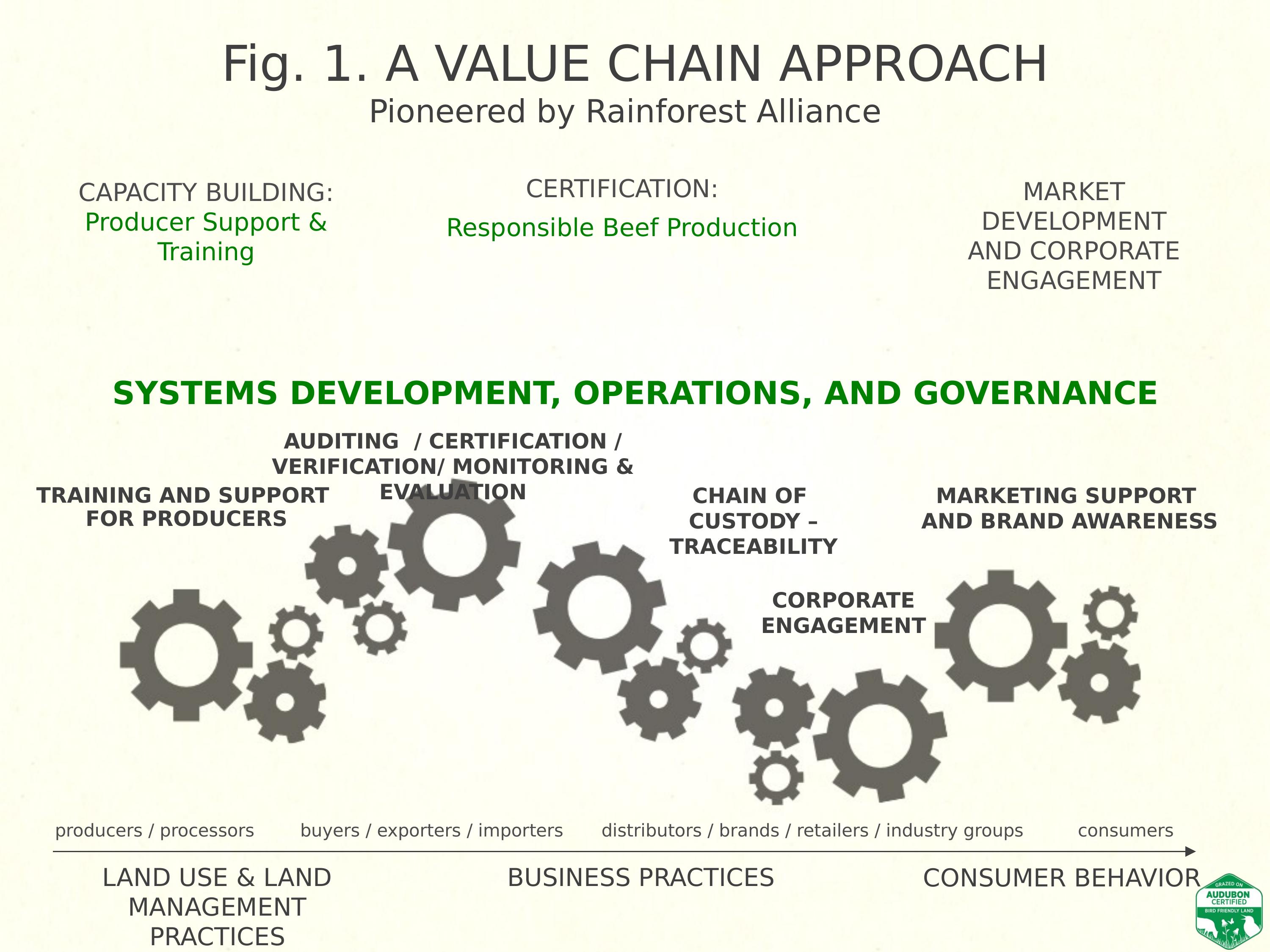
A long-time colleague at Audubon reached out, seeking help addressing barriers to success as ACR worked to scale its bird-friendly ranching certification program to 10 million acres.
Read more
Viewing the certification program as a system of interconnected cogs, led national and regional executives, ranching and retail partners, and funders through the collaborative process of designing an Integrative Conservation Strategy — because if even one cog becomes stuck, the whole machine grinds to a halt.
- Diagnosed which program components were working and which needed capacity-building investments, based on a survey of staff, partners, and funders.
- Devised a menu of options for ACR to generate revenues from the valuable services the program can offer to producer and supply chain customers. One opportunity included certifying members of landscape conservation initiatives working to improve land stewardship in high conservation value habitats such as migratory corridors.
- Designed a Monitoring & Evaluation framework to quantify and report triple-bottom-line benefits, paired with targeted marketing and communication options to build awareness of and trust in ACR’s certification seal.
- Developed staffing plan, budget, and annual production timeline under two scenarios: 5 and 10 million acres.
“(Jonathan) went above and beyond to deliver something that we can truly use to make our program more successful.”
— Christopher Wilson, Director, Conservation Ranching Certification Program, National Audubon Society
Questions We Help Clients Answer
“Before we commit staff, funding, and our reputation to a strategic decision, how can we be sure it is the right one?”
We vet the strategy before you commit to it — grounding it in the consensus that emerges across many studies, not a single study or advocate that happens to agree with the idea.
Read more
Before NRDC could build a beef sustainability standard, we spent a year synthesizing the sustainable ranching literature into an annotated bibliography evidence base, then codified findings into criteria, best practices, and outcome metrics — the direct precursor to the Grasslands Alliance Standard. We’ve applied the same diligence for the Embers Foundation, Audubon Conservation Ranching, Earthjustice, and BurnBot, among other clients.
“How do we know this is working — and how do we build the stakeholder support to scale it?”
Too many conservation organizations either skip monitoring or never use collected data to identify opportunities to improve management.
Read more
We apply leading adaptive management frameworks (e.g., Conservation Measures Partnership) and trusted metrics systems (e.g., those used by Point Blue Conservation Science’s Rangeland Monitoring Network and the National Resources Inventory). That closes the loop: evidence that improves management, then supports the compelling multimedia storytelling that inspires funding, support, and replication. For Audubon, that meant recommending an M&E framework alongside the communications plan — not after it.
“We’ve got the right stakeholders in the room, but the conversation keeps circling — we need help aligning partners around a strategy that focuses on the goals we share and how we can work together to achieve them.”
Circling usually means the room hasn’t yet identified shared goals — which takes real listening and learning.
Read more
We’ve convened NGOs with genuinely competing theories of change — TNC, WWF, EDF, Audubon, Defenders, Ducks Unlimited, and the Savory Institute among them — to align on a shared vision for sustainable beef production. We’ve done the same at the technical level, collaborating with UC Davis and Cornell scientists to convene 40+ scientists, ranchers, and NGO leaders around a single draft standard.
“We need help understanding our key barriers to success and how to address them to make our program more effective and impactful.”
A program is a system of interconnected parts, and if just one isn’t working to its potential, the whole thing can stall.
Read more
We apply a systems-based approach to diagnose which “cogs” in the machinery of success are working and which need capacity-building investment. For Audubon, that meant surveying national and regional leaders and partners to surface valuable lessons learned during the program’s initial rollout. We identified priority challenges and the solutions interviewees found most promising, then applied those findings to recommend strategic improvements in program design and service offerings.
“We need help improving land management — from fuels reduction and grazing to invasive plant control — to maximize benefits of good stewardship for our site and minimize risks of getting it wrong.”
Poor management causes expensive and time-consuming unintended consequences. For example, an improperly-timed fuels treatment that converts a native grassland to fire-promoting weeds has made the problem worse.
Read more
We design management strategies to generate their full suite of potential benefits and avoid risks of unintended consequences. Our report for BurnBot illustrated how to time precision burning treatments to match science-based protocols for controlling priority invasive weeds — and favor natives — thus generating valuable benefits including and beyond fuels reduction.
What People Say
“Audubon sought Jonathan’s assistance in providing a comprehensive assessment and guidance on key questions to position the Audubon Conservation Ranching program for continued success as the program continued to expand toward 10 million acres… Our final product far exceeded my expectations. It was a pleasure working with him!”
— Christopher Wilson, Director, Conservation Ranching Certification Program, National Audubon Society
“Jonathan is one of those rare scientists who successfully pairs his deep technical knowledge with effective, clear communication for the layperson audience… He is results-driven, strategic and articulate. I highly recommend Jonathan.”
— Debbie Hammel, Director, Land Markets Initiative (former NRDC co-manager)
“Jonathan does an excellent job balancing the need to maintain the focus required to execute detailed, science-based, high quality, long-term work products, such as the Grasslands Alliance standard, while advancing complex stakeholder processes… He is extremely knowledgeable, well organized, thorough and timely with a strong commitment and vision.”
— Doug Sims, Managing Director, Green Finance & Economic Development, NRDC
“Your roads and grasslands work continues to be singular and unmatched, and I really think should be applied and adopted deep and wide.”
— Dan Gluesenkamp, President, California Institute for Biodiversity